Camas-Washougal logo tag

Large commercial buildings must meet new Washington energy performance standards; Clark Public Utilities can help

Utility offers free consulting services for certain sites

By
timestamp icon
category icon Business, Clark County, Environment, News
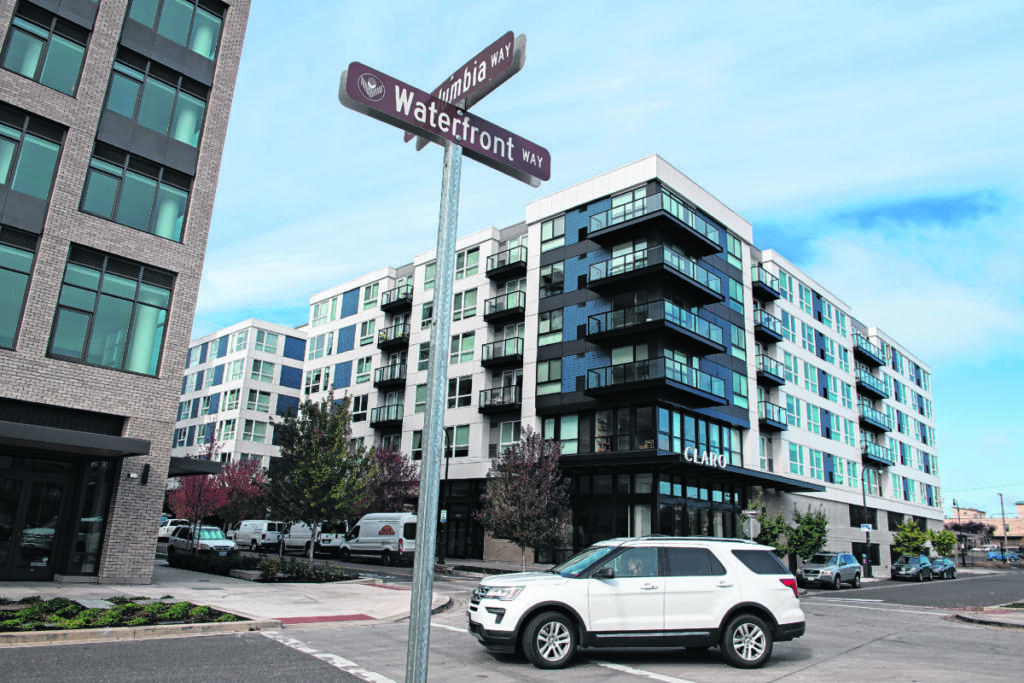
Multifamily buildings larger than 20,000 square feet, like the Broadstone Claro apartments, right, at The Waterfront Vancouver, are one of the types of buildings that will be beholden to the new Washington Clean Buildings Performance Standard. (Amanda Cowan/The Columbian files)

Do you own a large commercial building? You may have only a few months to get into compliance with the state’s new clean building standards. But Clark Public Utilities can help.

Washington’s lawmakers approved the Clean Building Act in 2019, creating energy performance standards for buildings larger than 50,000 square feet. They expanded what was called the Washington Clean Buildings Performance Standard later to include multifamily buildings and buildings larger than 20,000 square feet.

The standards apply to most commercial buildings larger than 20,000 square feet, roughly the size of the Trader Joe’s in east Vancouver’s Columbia Crossing Shopping Center.

Building owners have to track energy use, develop an operations and maintenance program to ensure their building’s systems operate efficiently, and create a plan outlining how the building will manage and improve energy performance. Buildings over 50,000 square feet also must meet a required energy performance target to help reduce energy costs and greenhouse gas emissions over time, according to the Washington State Department of Commerce.

Clark Public Utilities offers owners of buildings between 20,000 and 50,000 square feet, or multifamily buildings over 20,000 square feet, free consulting services to help them get their buildings in shape for the approaching deadlines. The consulting program is a partnership with Portland-based Stillwater Energy.

Building owners can register for webinars walking them through each of the requirements and get individual help during “office hours” periods.

Clark Public Utilities is covering the cost of the pilot program, hoping the investment will save it from having to buy or produce more power due to previous building inefficiencies.

“Our staff will work with those who are participating in this program and connect them to specific incentive programs and also offer support and information that will be tailored to each one of their experiences,” said Dameon Pesanti, a spokesperson for the utility.

The compliance deadlines are staggered based on size. Buildings larger than 220,000 square feet must meet the requirements first, by June 1.

The deadlines continue: June 1, 2027, for buildings between 90,000 square feet and 220,001 square feet; July 1, 2027, for buildings between 20,000 and 50,001 square feet and all multifamily buildings larger than 20,000 square feet; and June 1, 2028, for buildings between 50,000 and 90,001 square feet.

Goal is to optimize, not penalize

Buildings might face specific challenges based on their purposes, technology or even the years in which they were built.

“We can help them sort of make sense of their unique situation in a way to optimize their property’s performance and efficiency,” Pesanti said.

Amelia Lamb, a spokesperson for the commerce department, said the Clean Buildings program aims to help building owners improve efficiency, reduce energy costs and support the state’s climate goals.

“If a building owner does not meet their compliance deadline, our program staff will work with them to bring them into compliance,” Lamb said.

Penalizing building owners who don’t comply isn’t the goal, Lamb said. But the department will penalize those not meeting the new standards, with fines possibly in the thousands for larger buildings.

The commerce department offers grants and incentives for building owners who are “early adopters” of the new energy standards. Those incentives can be administered in addition to Clark Public Utilities’ own business efficiency incentives, according to the utility’s website.

Pesanti said the utility wants to turn this compliance standard into an opportunity for businesses to find lasting savings and reduced operational costs.

“There is a very positive business case for these kinds of upgrades and programs,” he added.

Lamb said the clean buildings standard is an important part of the state’s strategy to meet Washington’s legally established climate targets.

“Buildings are one of the largest sources of energy use in the state,” she said.

The program also delivers practical benefits for building owners and occupants, helping them to do things like lower their power bills and find areas where energy use could be improved.