Camas-Washougal logo tag

Southwest Washington lawmakers weigh in on passage of millionaires tax

Vancouver Dem Stonier says tax will address needs; Battle Ground’s Cortes says more needs to be done to cut taxes

By
timestamp icon
category icon Clark County, Government, News
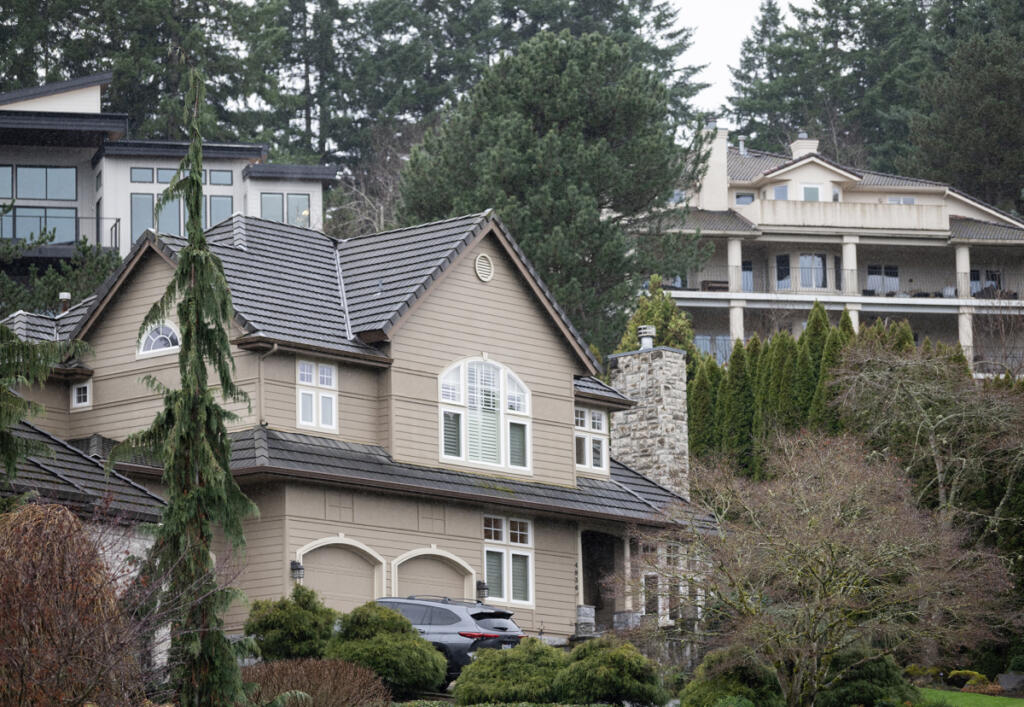
Expensive homes dot a hillside near Camas Meadows Golf Club along Lacamas Lake in Camas, as pictured Feb. 18. (Taylor Balkom/The Columbian files)

About 1,000 high-income earners across Southwest Washington will likely pay the state’s first income tax in nearly a century.

Lawmakers passed the so-called millionaires tax Wednesday, shortly before approving an $80.2 billion supplemental operating budget and adjourning Thursday evening.

Senate Bill 6346 will place a 9.9 percent tax on individuals or couples earning more than $1 million a year starting in 2028. Gov. Bob Ferguson has yet to sign the bill but is expected to do so.

The legislation, in exchange, expands eligibility for the Working Families Tax Credit, a program that grants payments of up to $1,330 for middle- and lower-income families in Washington.

It also reduces some taxes on businesses and creates a sales tax exemption for grooming and hygiene products.

Clark County’s lawmakers largely voted along party lines in both chambers, except for Sen. Adrian Cortes, D-Battle Ground, who joined a handful of Democrats opposing the bill.

Cortes said in a Thursday statement that he believes the state’s tax code disproportionately hurts working families and hinders the state’s ability to fund key services on which people depend. He appreciates that the new income tax could start to address that, he said.

“But I believe we need to do more to cut taxes and provide real relief for Washingtonians and small businesses,” he said.

Cortes also wants to see lawmakers increase efforts to tighten the state’s fiscal belt and prepare for downturns in the national and global economies.

“In the end, it’s critical we rebalance our tax code, but we need to ensure we stop relying on everyday people,” he said.

Rep. Peter Abbarno, R-Centralia, called the income tax unconstitutional, unpopular and unnecessary.

“Washington has more revenue in this biennium than they had in the last biennium, and so it wasn’t needed,” he said.

He’s also concerned that the income tax law was written in such a way that it could be adjusted by the Legislature in the future to lower the million-dollar threshold.

Abbarno questioned why Democratic lawmakers didn’t use the bill to dedicate money to issues that would address affordability as proposed in a number of House amendments. He specifically mentioned amendments that would have reduced the state’s sales tax and dedicated the income tax revenue to lowering health care costs or funding education or child care.

“None of those amendments were accepted,” he said.

Rep. Monica Stonier, D-Vancouver, said a lot of work went into trying to find the right balance between raising the tax on wealthy Washingtonians and offering tax relief.

The legislation ended up targeting money earned over $1 million, which Stonier said allows lawmakers to deliver on the fairness component voters expected.

She said the state’s budget has increased because of demand for early learning programs, child care, disability services and Medicaid.

“These are all really important things that government is supposed to deliver for people, in my opinion,” she said. “Is the recommendation then that we roll back on our providing early learning and child care?”

The supplemental budget approved by this year’s Legislature does include significant cuts to early learning and child care programs. However, 5 percent of the proceeds from the income tax will go to the state’s Fair Start for Kids Act starting in 2029.

As for why Democrats didn’t support dedicating more funding to specific programs, Stonier said this would make it difficult for lawmakers to be flexible with spending down the road.

She also said she wouldn’t support the income tax being more broadly applied to those making less than $1 million.

“We obviously can’t bind future legislatures from doing what they’re going to do. But at this point in time, it’s just wildly unpopular in the state,” Stonier said. “I don’t support an income tax for every Washingtonian. I support an income tax for those making over a million dollars.”

Stonier said the state’s tax code would need to change dramatically for her to support lowering the threshold for the income tax.

Republican House members, who all opposed the tax, launched a historic 24-hour floor debate, introducing 82 amendments to delay the vote.

The House ultimately passed it, sending it back to the Senate to approve amendments.

Lawmakers expect Ferguson to sign the legislation into law in the coming days.

Washington’s Supreme Court overturned a graduated state income tax in 1933. The court ruled that the state Constitution requires any state-level income tax to be uniform across taxpayers.

The ruling is controversial today, but experts expect any income tax passed by lawmakers would have to come before the state Supreme Court before it could be enacted, as was the case with the capital gains tax.

Clark County’s business leaders fear the bill could push high income earners out of the state.

“If that occurs at scale, the result could be fewer investments, fewer job creators and a smaller tax base than anticipated,” said John McDonagh, president and CEO at the Greater Vancouver Chamber.

His organization is urging the governor to consider solutions that would “maintain Washington’s competitiveness while meeting the state’s revenue needs.”