Camas-Washougal logo tag

‘A beautiful soul’: Riders at Son Rise Ranch remember mustang Cherokee

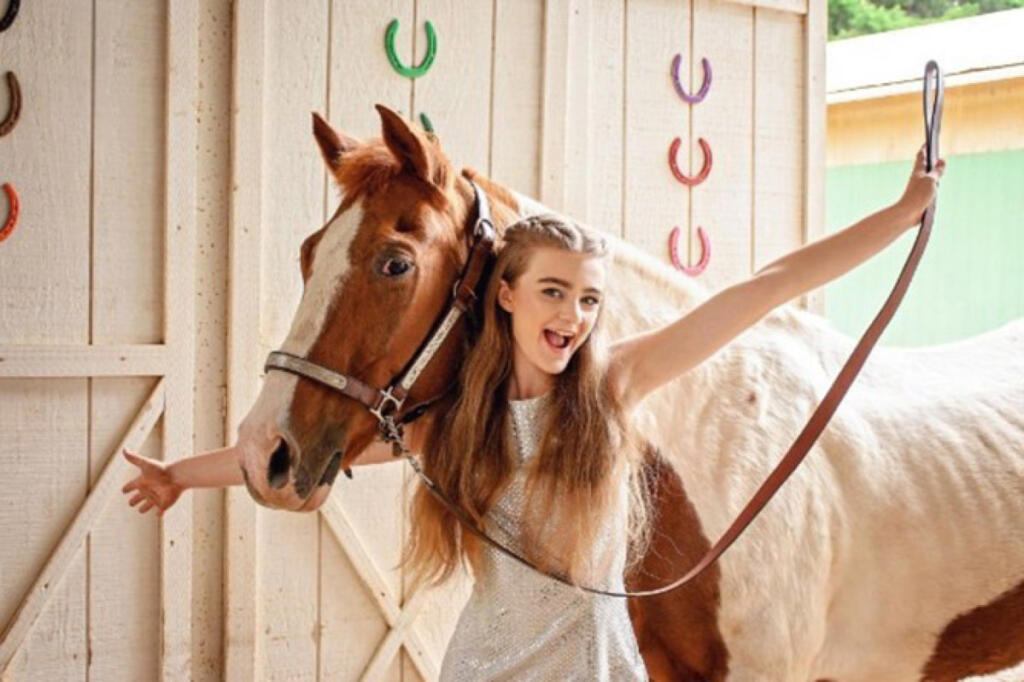
Horse helped generations of riders gain confidence

By
timestamp icon
category icon Camas, Life

On a warm Friday evening in May, Ilura Anderson climbed onto a 40-year-old mustang’s back for what she thought would be just another ride at Son Rise Ranch in rural Clark County near the Vancouver-Camas border.

The mustang, Cherokee, had already outlived most horses by a decade, and ranch staff knew his time was running short. But that night, Cherokee seemed determined to keep going. Riding bareback, Anderson tried to cool him down after their ride, only to find the old horse unwilling to slow down.

“He just had so much energy,” said Anderson, 18. “He just kept going for rounds — loop after loop after loop.”

The two had the arena to themselves. Anderson lifted her hands from the reins and trusted Cherokee to carry her as he had carried hundreds of young riders for three decades. Less than 24 hours later, the beloved mustang was gone.

“I was actually the last person who got to ride him,” Anderson said. “We definitely knew that we were going to have to put him down by the end of the month. Part of me wonders if he knew, and that’s why he had so much energy (that night).”

Cherokee, Son Rise Ranch’s first adopted mustang, died May 18, closing a remarkable chapter in the ranch’s history. Purchased for $75 after being rounded up from the wild, the horse spent 30 years carrying riders, comforting nervous beginners and helping generations gain confidence in the saddle.

“We gave him back life,” Son Rise Ranch director Pam Cronkhite said, “and then he turned around and gave it to us.”

Wild mustangs typically live 15 to 20 years, while domesticated mustangs can reach 25 to 30 years — and sometimes their 40s — with proper care, according to askavet.com.

Cronkhite and Monica Harrison, the ranch’s lead instructor, attribute Cherokee’s longevity to low-impact exercise, consistent care and his strong will to live.

“He has always been made out of iron,” Harrison said. “He was so incredibly well built. Everything was rock hard. And he had a tremendous amount of will. He was always enthusiastic about anything he wanted to do. So basically — good genetics, excellent structure, constant exercise because he was always moving and then just sheer willpower.”

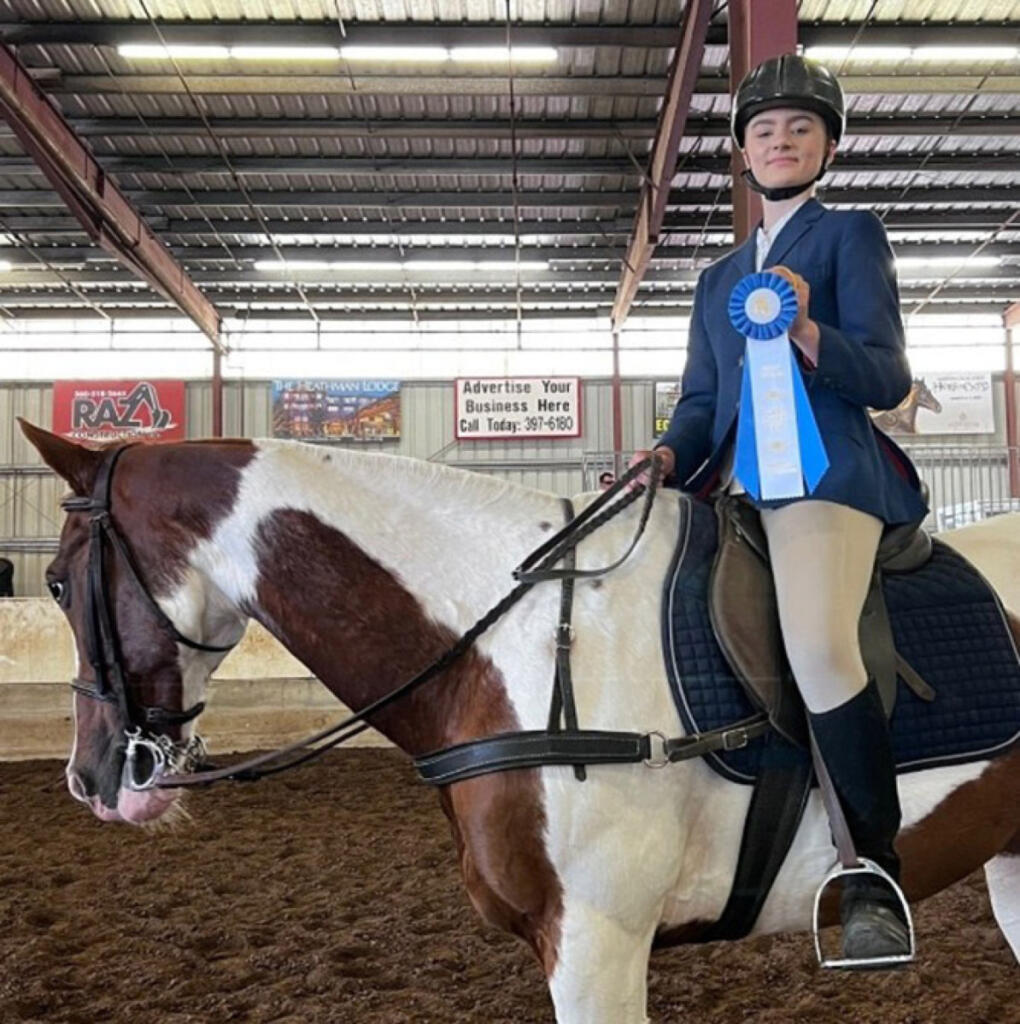
Cronkhite has owned and operated Son Rise Ranch, which offers after-school programs for at-risk and foster children, since 1994. She estimates at least 300 people rode Cherokee during the past 30 years, helping them develop confidence, trust, patience and resilience.

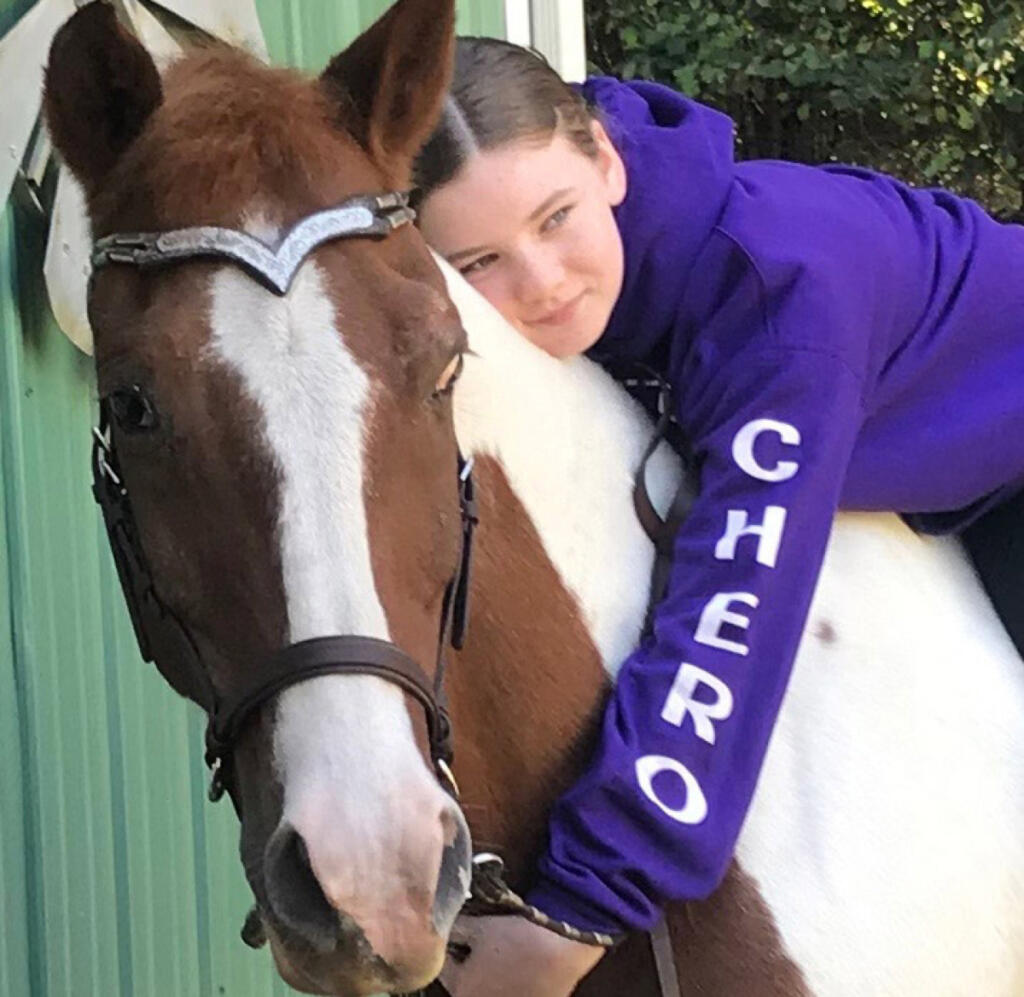
Jessica Van Gelder, a Son Rise Ranch rider since 2023, said Cherokee taught her how to trust both horses and herself, and that he was one of the only horses she trusted enough to ride without a saddle or bridle.

“I learned that I could let go, I could let him do the work and I could trust him,” said Van Gelder, 18.

Cherokee wouldn’t simply obey every command, Anderson said; riders had to learn to communicate correctly and calmly.

“When he was being pushy or charge-y, there was always a reason,” she said. “(But) I trusted that horse with my life.”

Harrison said Cherokee was the horse she chose for many riders’ first canter.

“If we put little kids on him, he was such a babysitter pony,” Anderson said. “He would just take care of them.”

Cherokee also became a favorite among advanced riders for his ability to be ridden tackless.

“My favorite memories were always whenever I got to ride him tackless — with no saddle and no bridle — and I could just canter him around the arena with nothing stopping us,” Van Gelder said. “Riding him tackless was absolutely a big moment for me. It had always been a goal, and he was one of the only horses I trusted enough to do that on.”

Cherokee’s many quirks earned him nicknames, Cronkhite said, including Class Clown for putting a foot on fences and standing on mounting blocks, and Tank Teddy Bear because of his sturdy build and affectionate nature.

“His spirit and personality were different from any horse I’ve ever met,” said Jada Schupp, 13, a Son Rise Ranch rider since 2023.

‘When they mastered Cherokee, they turned’

Before arriving at Son Rise Ranch, Cherokee lived as a wild mustang in Oregon’s remote South Steens Herd Management Area. After drought left his herd struggling for food and water, he was rounded up, adopted by well-meaning but inexperienced owners and turned out on pasture that was too rich. Cherokee and three other mustangs repeatedly suffered colic and laminitis before the owners sent them to an auction in Hermiston, Ore., in 1996.

“They ran them as ‘loose horses,’ which means they aren’t ridden through (the auction ring) and go by the pound, and unfortunately that means most of them go to the slaughter,” Cronkhite said. “So we saved him from the pen, bought him and brought him home.”

Only later, when Cronkhite registered the freeze brand on his neck, did she learn that the “2- or 3-year-old” she thought she’d rescued was actually a 10-year-old horse.

Cherokee’s story of redemption resonated with many children, teaching them about second chances and perseverance.

“The kids that felt like they had no value saw this horse that, in people’s eyes, had no value get turned around and become something of value,” Cronkhite said. “It made him very relatable to my at-risk kids because they were struggling with the same thing. When they mastered Cherokee, they turned because of that relationship.”

Get the latest headlines in your email every week!

This field is for validation purposes and should be left unchanged.

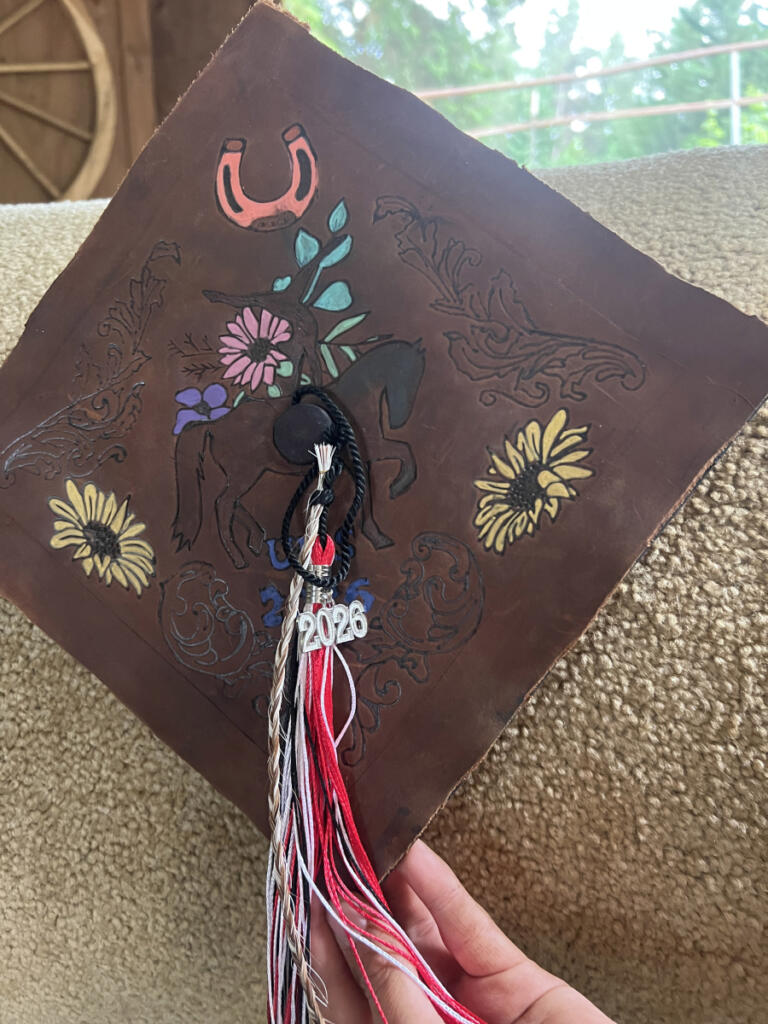
Anderson tried not to become too fond of Cherokee when she came to Son Rise Ranch in 2023, knowing he wouldn’t be around forever. But she got so attached to the horse that when she graduated from Union High School on June 5, she carried a braided section of his tail on her cap tassel.

“I’ll definitely have a piece of him with me,” she said, “because he truly meant so much to me. He was truly a beautiful soul.”