Camas-Washougal logo tag

Serious crime fell in Clark County in 2025, report finds

Decrease mirrors statewide drop in homicides and car thefts

By
timestamp icon
category icon Public Safety
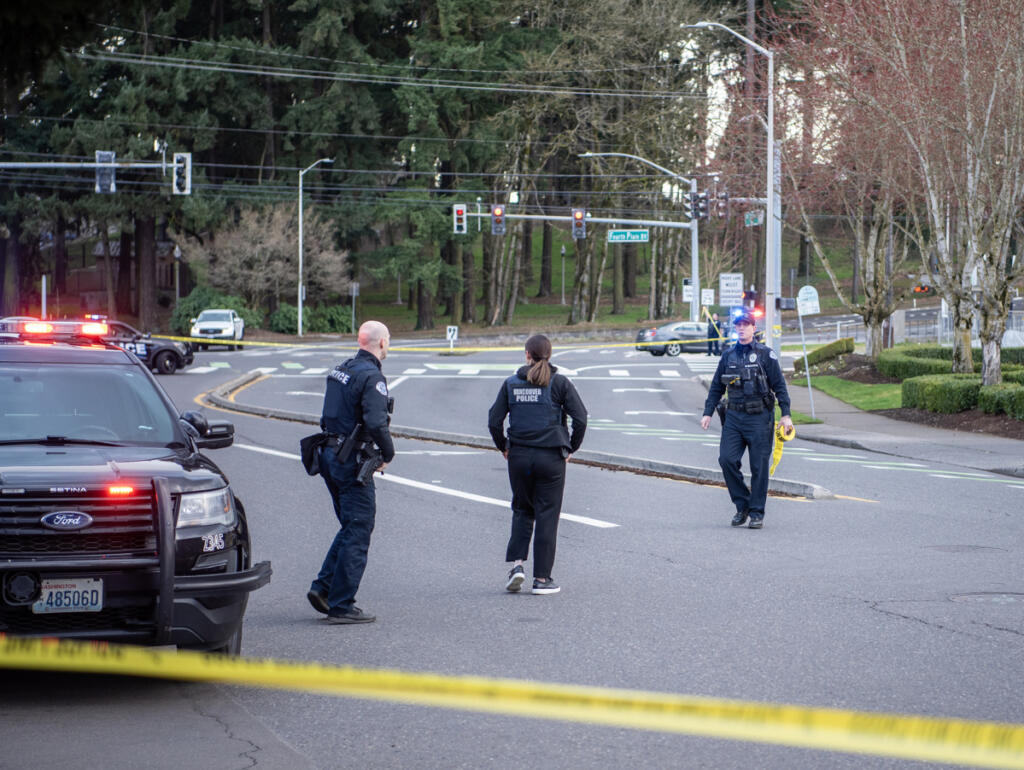
Vancouver police officers rope off a crime scene March 4, 2025, after a shooting near Fort Vancouver Way and Fourth Plain Boulevard. Crime in Vancouver fell between 2024 and 2025, according to a new state report. (Taylor Balkom/The Columbian files)

Clark County and its cities saw overall rates of serious crime dip in 2025, mirroring a statewide drop in homicides, car thefts and property offenses, according to an annual report released by state law enforcement leaders.

The annual Crime in Washington report, compiled by the Washington Association of Sheriffs and Police Chiefs, tracks offense and arrest data submitted by police departments and sheriffs’ offices across the state.

“Any reduction in crime means fewer victims, and that is great news for our communities,” Steven Strachan, executive director of the association, said in the report.

Washington’s crime rate fell to 46.43 offenses per 1,000 people in 2025. Statewide, property crimes dropped 21.3 percent and violent crimes decreased 13.8 percent, while homicides fell 21.6 percent among agencies reporting two full years of data.

Clark County’s cities recorded reductions in overall crime. Washougal saw the sharpest drop at 21.2 percent, followed by Battle Ground at 11.5 percent. Camas saw a 5.2 percent drop and Ridgefield 2.6 percent. Vancouver’s overall crime rate dropped 10.6 percent, although its rate remains the highest in the county at 86 offenses per 1,000 people.

Vancouver, the county’s largest city, recorded 17,631 total offenses in 2025, down from 19,730 the year before.

Homicides in Vancouver dropped from 10 in 2024 to four last year, and manslaughter cases dropped from three to two.

Property crimes drove much of the city’s improvement. Vehicle thefts dropped 38 percent from 1,225 stolen cars in 2024 to 759 in 2025, while burglaries fell 15.7 percent.

The Clark County Sheriff’s Office reported an improvement in the rate of violent crimes. The agency reported six homicides in 2024 but zero last year and only one manslaughter last year and the year prior. However, the data was incomplete. The sheriff’s office submitted only four months of records prior to the state reporting deadline, logging 1,712 total offenses during that window.

Washougal reported one manslaughter and one murder last year. Battle Ground reported one manslaughter.

Bucking the downward trend, reported rapes in Vancouver rose 18.2 percent to 143 cases, even as suburban towns like Battle Ground, Camas and Washougal all reported double-digit percentage drops. The sheriff’s office saw a dramatic drop from 88 reported rapes in 2024 to 29 last year.

Narcotics violations in Vancouver also spiked 56.4 percent to 779 offenses, primarily driven by amphetamines and methamphetamine, while surrounding suburban cities recorded drug-crime drops of roughly 60 percent. The sheriff’s office reported only 16 narcotics crimes last year, compared with 75 in 2024.

Clearance rates were mixed, with the sheriff’s office reporting 27.2 percent clearance, Vancouver police reporting 27.6 percent, Washougal police 33.9 percent, Ridgefield police 43.7 percent, Camas police 20.8 percent and Battle Ground police 41.5 percent. Washington’s clearance rate was 29.5 percent.

Washington State University Vancouver campus police did not report any crime data to the association.

State law enforcement executives point to several structural shifts that likely fueled the widespread crime reductions. Strachan credited the passage of updated police pursuit laws in June 2024, alongside a return to proactive policing strategies.

Strachan also highlighted state investments in deflection, diversion and reentry programs designed to treat substance-use disorders and behavioral health crises before they escalate into criminal incidents. Improved court processing times and targeted community violence interventions further supported the positive trends, according to the report.

Despite the encouraging figures, authorities urge residents to view the statistics with a critical eye. Police chiefs and sheriffs caution that the report measures only crimes officially reported to law enforcement, and there is concern that reporting rates for certain offenses have slipped.

Later this year, the FBI will release data from the National Crime Victimization Survey, which uses direct public surveys to estimate the true gap between actual victimization and police reports, according to the report.

The report noted persistent challenges, including Washington remaining last in the nation for law enforcement staffing per capita for more than a decade.

The report also notes that violations and offenses are not convictions, meaning the allegations did not necessarily lead to imprisonment.