Camas-Washougal logo tag

Council mulls increasing housing density, cutting parking

Changes to be in county’s 20-year growth plan

By
timestamp icon
category icon Clark County, News
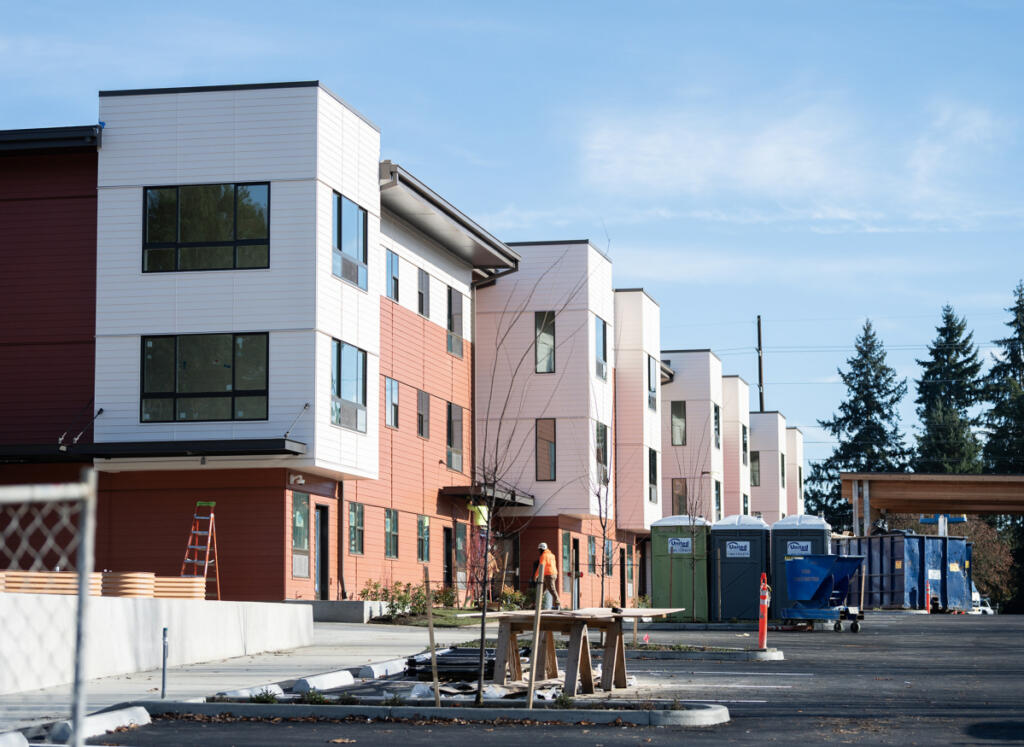
Construction continues Nov. 19, 2025, at Felida Park Senior Housing in Felida, since completed. Changes to Clark County’s development code would make it so that no parking spaces are required at senior living developments. (Taylor Balkom/The Columbian files)

Proposed changes to Clark County’s development code will increase housing density while also decreasing spaces required for parking. These and other changes, which will be included in the county’s 20-year growth plan, were the focus of a July 22 council work session.

Elizabeth Decker, a consultant with Portland-based JET Planning, said the code changes align with legislative parking reforms passed in 2025. Those changes were intended to address the costs that parking requirements added to development, as well as what the Legislature deemed “excessive reliance (on) automobiles with attendant impacts on human health and greenhouse gas emissions.”

As part of the changes to county code, parking space minimums for new single-family homes will be reduced from two spaces to one, although homes less than 1,200 square feet will have no required parking spaces. For multifamily housing developments with five or more units, the requirement will be reduced from 1.5 spaces to 0.5. Transitional housing, affordable housing, senior housing designated for residents aged 55 and older, and co-living housing also will have no required parking spaces.

Along with legislative requirements, Decker said, the code changes are being driven by the county’s implementation of the Housing Options Study and Work Plan adopted in 2022 and updates to the 20-year growth plan.

“We’ve been working on implementation through several phases of code updates since then,” Decker told the council.

While there is sufficient capacity of single-family and middle housing to meet growth forecasts, she said, the county will need to triple its multifamily housing capacity.

Reducing available parking in higher-density neighborhoods won’t be easy. Several county councilors said they are worried about future impacts.

“I’ve heard from some communities where a lot of development is occurring that there’s a real difficulty because people are sort of parking all over the place because there’s not enough parking spaces,” council Chair Sue Marshall said.

Marshall said Clark County is in an awkward phase in which transportation-related code is being changed but the resources needed to support those changes are not yet in place.

“I get that parking takes up land and we want to reduce that, but I feel like we’re not quite ready for it,” she said.

Get the latest headlines in your email every week!

This field is for validation purposes and should be left unchanged.

Decker said some developers can, and likely will, choose to provide more parking spaces than required by state law.

“The county does need to come into compliance with that,” Decker said. “There’s no limitation on how much parking folks can choose to build.”

Initially, both the Legislature and the county’s housing study had narrowed these kinds of restrictions to areas with high-capacity transit corridors, like C-Tran’s bus rapid transit routes. However, Decker said the state later broadened that approach to accelerate the timeline.

Jose Alvarez of the county’s community planning office said that even with the county’s existing requirements for parking, there still are problems. For example, he said, in areas where Clark County requires two parking spots and a garage, the garage often is used for storage or something else. In turn, that pushes more cars to park on the street — if on-street parking is allowed. The county also has tried to have off-street requirements for planned subdivisions, but that has met resistance from the development community, he said.

“We’re trying to create these smaller lot situations, more private roads in the urban area which we’re seeing that maybe don’t allow for parking on one side of the street. More of that is becoming part of the urban fabric,” Alvarez said.

Councilor Glen Yung had concerns about access for first responders. He said new developments are being built with narrow roads, limited parking and no access to public transit.

“People are parking along the roads, making it impossible for first responders to get from one point to another because there’s just isn’t enough space,” Yung said. “It’s kind of that chicken-and-egg situation that we’re in. (There’s) not enough access to public transportation or being able to get around, but we’re so car dependent. I hope that staff can maybe figure that out for us.”